Showing posts with label labels under photos. Show all posts

Monday, 11 April 2011

April Quickens My Heart

Pheasant At Barleycorn

In our garden calendar, April is the month, which calls forth our trumpeting Daffodils to herald the onset of Spring. For, though the months of January through to March have bestowed us with beautiful carpets of Snowdrops and sunny banks of Aconites, they are the Winter bulbs which precede the joy and beauty of Spring.

Siskins At A Feeder

Being in the heart of the countryside affords us many pleasures, some of which are occasional visits from colourful Pheasants with iridescent, ultramarine feathers. Having a large wood in the vicinity enables us to identify a wonderful variety of birds, which also frequent our feeders, forage around the garden, and drink and bathe in our ponds. This month saw the return of striking Siskins with their black crowns, green and black feathers and gold wing-bars.

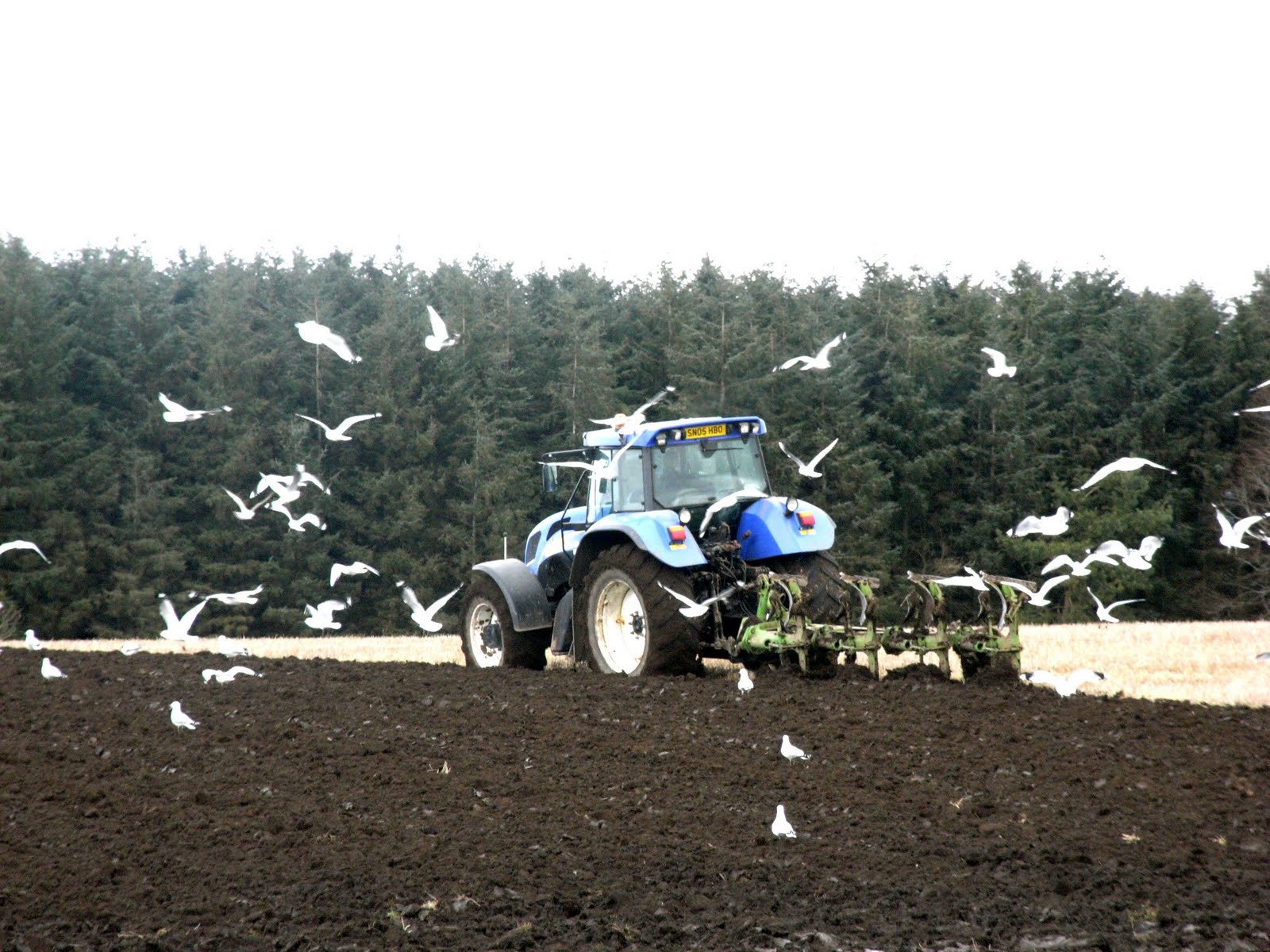
Tractor And Plough

The combination of longer daylight and warmer temperatures make conditions right for the farmers to plough their fields. It's wonderful to observe the straw-coloured thatch of last year's crops being turned over by the ploughshares, and so a new farming year begins. Lambs bleating and gamboling beside their mothers, the warmth of the sun on our backs as we clear away the spent foliage of last year's perennials, the childhood joy of seeing rainbows after April showers...simple pleasures that bring us so much joy after the long, dark days of Winter.

Purple Hellebores

Hellebores are such elegant, stately plants, which spread well of their own accord, without needing to be cosseted. Over the years we have invested in white, pale green and pink varieties and each year they greet us like old friends. I love cutting away the old, leathery leaves to make way for the fresh lime-greens of their Spring foliage.
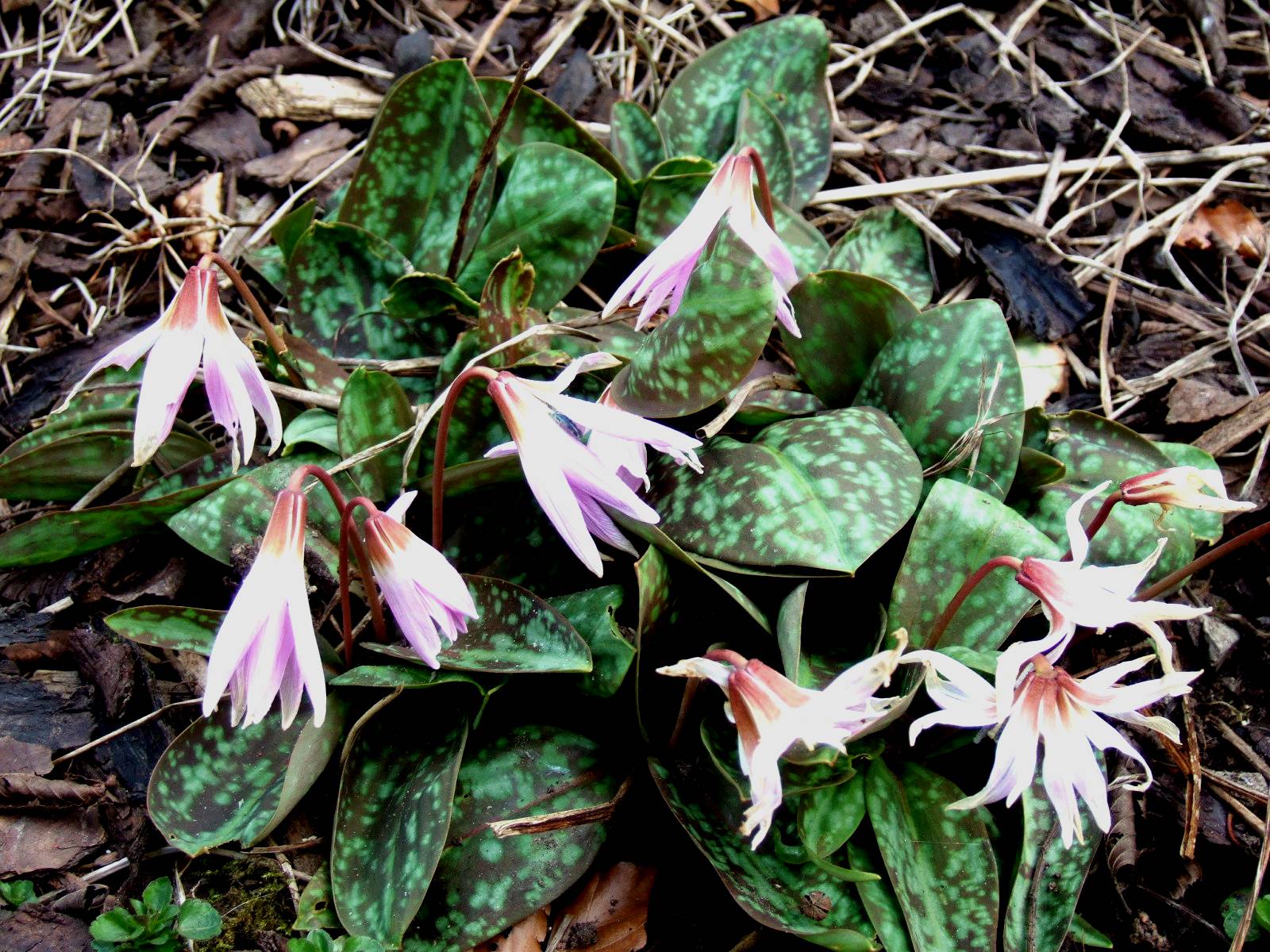
Pagoda Lilies

Pagoda Lilies bring a touch of the exotic to any garden. We have posies of these growing next to varieties of Trilliums. We planted them at the front of a large bed next to tall, majestic Camassias, though the latter do not bloom till next month, which helps to prolong the Spring garden. Considering that bulbs involve little effort in planting and tending, we can never have too many in our gardens. To this end, we try to plant new varieties every Autumn.

Mixed Daffodils
One section of our garden runs adjacent to a farmer's field. We share the stane-dyke wall, which acts as a border between us. Couch grass and nettles run the length of this wall on the farmer's side. Rather than try to cope with these invasive plants, I decided to plant lots of mixed daffodils and a variety of grasses interspersed with wild flowers...Pink Campion, Annual Poppies, Primroses, Aquilegia, Corncockle and Cornflower. Although we still get tall Couch Grass growing through, everything looks naturalised and saves me a headache.

Orange-Centred Daffodils

Because we have invested in planting bulbs every Autumn for the past 20 years, our Spring garden now boasts hundreds and hundreds of Daffodils. Each one is a cup of cheerfulness and a testimony to the happy years spent here at Barleycorn. I do love their nodding heads, the variety of colours and species and the heady scent of the star-shaped white Narcissus. The Queen Bees serenade me, buzzing in and around the heads from morn till night, getting their all-important sustenance after their Winter hibernation.

Double-Petalled Daffodils

Every which way I turn in our garden in Spring, I am greeted with bouquets of Daffodils; some white, others creamy-yellow, others still, orange...some with large trumpets, some multi-headed, like the tete-a-tete, some shaped like stars...so many varieties. I belong to the generation of children who learned to recite poems by heart at school. And each Spring when I gaze upon my host of Daffodils, I feel an affinity to Wordsworth's sentiments, 'And then my heart with pleasure fills, and dances with the Daffodils'.

Ripples On The Pond

The play of light on the ponds offers constant fascination. This is the month when we have Frogspawn. In March 2010, we had six weeks of snow with temperatures so low the ponds were mainly frozen. This resulted in a downturn in our Frog population. This year there was no Frog Chorus to speak of...and, yet, we still have some spawn in both ponds. The front pond is shallower and, therefore, warmer, and so the Frogs always mate there first.

Spawn Beneath The Surface

However, we now have some spawn in the back pond too. As the local farmer has been draining the pond in his field again this month, I am so glad to offer habitats to the Frogs. We are hoping the spawn will have a better chance to develop this year and that, in time, our colony of Frogs will be replenished.

Spawn In The Front Pond

It is always wonderful to be able to watch Nature unfold before our eyes and ponds are a good way of affording this opportunity. Now that the spawn is here, the Newts will follow, and, along with them, the myriad of pondlife. The many oxygenators keep the still waters clean and healthy, and the many marginals and Lilies offer shelter. Later, in the Summer, we have two species of Dragonflies, as well as the smaller Damselfies which live and breed in our ponds.

After The Spawn

After the eggs have hatched, the jelly turns a greenish colour and the Tadpoles hide amongst it and live off it. Soon we might be lucky enough to see the Newts appear...to feast on the Taddies. They always look like dragons compared to the miniature size of the Tadpoles, and they suddenly pop up from under the jelly, like Crocodiles in a tropical river.

Hoverfly On A Dandelion

The gardeners will recognise that the hairy leaves in this picture belong to Oriental Poppies. Why on earth allow a Dandelion plant to grow up amongst them? I am trying to encourage wildlife in my garden. That is the raison d'etre for its existence in the first place. It's the wildlife which brings a garden to life. Queen Bumble Bees need sustenance after their long Winter hibernation...hence the reason for allowing the Dandelion head-room. In the video for this month, you will see the Hoverfly feeding on this Dandelion. In return, it will feed upon any aphids and nasty bugs, and, like the Bees, will help with the pollination of my garden.


In Front Of The Barn

This is the biggest log-pile I have in the garden. The top is made up of fallen twigs and small branches, which are tweaked out and specially chosen by our five pairs of resident Jackdaws for replenishing their nests in the chimneys of the Barn. We leave some of the moss we gather from around the garden, spent chaff from last year's plants and any other material suitable for nest-building. Then we watch as Robins, Blackbirds, Jackdaws and Thrushes fly in to choose their pick-and-mix from the pile. In return, they feast on bugs and pests and serenade me the whole year through.
xxxxxxx

Spring Garden At Barleycorn, April 2011 is the title of this month's video, and the music to accompany it is Beethoven's Symphony No. 6 in F, Opus 68 'Pastoral', Awakening of cheerful feelings in the countryside. I hope you all enjoy it.


Monday, 31 January 2011

January Ode

Yellowhammers

You shall go out with joy and be led forth with peace,
and the mountains and the hills shall break forth before you.


Siskins

There'll be shouts of joy and the trees of the field
shall clap, shall clap their hands,

Chaff---Spent Perennial Stems

And the trees of the field, shall clap their hands,
and the trees of the field shall clap their hands,


Chaff---Spent Stems of Flag Irises

and the trees of the field shall clap their hands
and you'll go out with joy.

S. Dauermann

First Snowdrops of this New Year

What shall we do to combat the blues during the dark days of Winter? Why, sing, of course! Sing for joy! Look at the flock of Yellowhammers which came to greet me! I admit you have to look carefully at my first photo to see their yellow heads...but, they are there. Look at the vibrant green and black colours of the Siskins who visited the feeders one day! Most of the garden is covered in chaff...all the spent stems from last year's perennials. But! In a few months, these beds will be a kaleidoscope of colour. And...the first Snowdrops are through. What's not to cheer about a New Year?
xxxxxxx

In this month's short video, you will see the diligent Farmer doing his daily round of feeding his sheep, collie by his side. The sheep are overwintering in the field adjacent to Barleycorn., which gives us something new at which to wonder and marvel. Enjoy!


The music accompanying the video is Sir William Walton's Touch Her Lips And Part, from Henry Fifth Suite.

Friday, 31 December 2010

An Early First Foot


Brambling And Sparrow


Although tonight is the Hogmanay festival in Scotland, when we might expect our First Footers to pay us a visit, we had our first-ever visit - in 20 years - from a pair of Bramblings this month.

A Corner Of The Barn

Bramblings are similar in looks to Chaffinches, though their breasts are dark russet on top with white underbellies. Though we have seen several sightings of them on Winter walks, we have not seen them at Barleycorn before.


View From The Back Door

The reason for their proximity to the house was the freezing temperatures and the heavy falls of snow. The low Winter sun on the snow made for picturesque scenes in the garden, and the Big Freeze meant we had the pleasure of feeding more birds at the stations than in Summer.


Taz Indoors

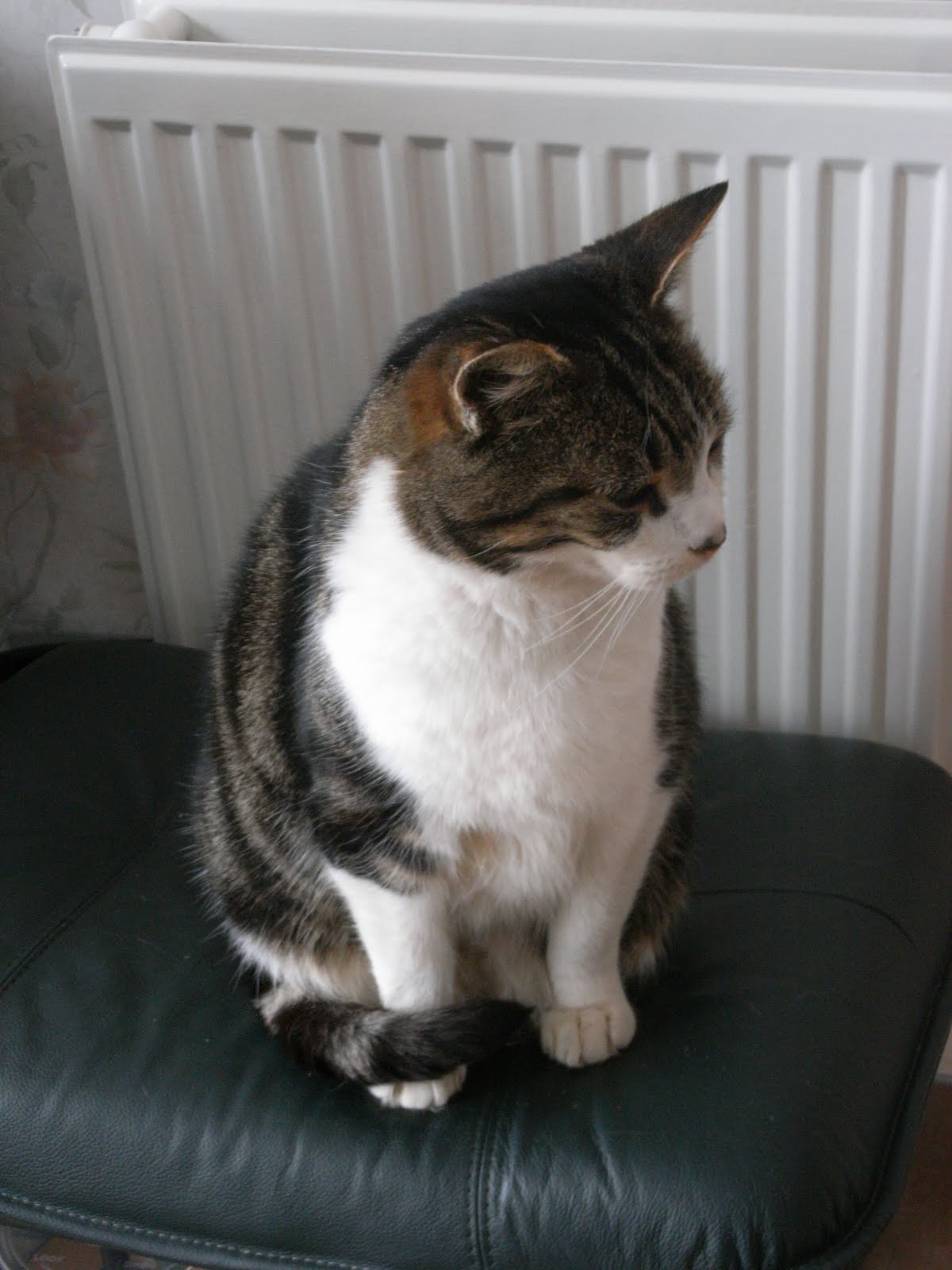
Not only did we have the company of our feathered friends, but also Taz, the Barn cat, who preferred to snuggle up beside the radiator for spells each day and forego his occupation of the Barn.

View Across The Field

This did not stop him catching the mice in the Barn for his supper. For while he has the camouflage of the trees in Summer when he goes a-hunting, he has to rely on nocturnal mammals in Winter.


The Bird Station

Each morning, we could detect the tracks of the local cats, the early birds and a Fox in the fresh snow. Perhaps it is our friend from earlier this year scavenging once more, now that we have had more snow.


This Winter the local farmer has sheep grazing in the adjacent field. The artesian well has filled again bringing Mallards each morning, flocks of Crows and Rooks and hundreds of Pigeons gorging themselves on the grain left in the furrows.


The video this month is called Garden Birds In December 2010. The music which accompanies it is from my CD Pan Pipes Of The Andes and the track is Llamada Se Los Buitres which I chose because it reminded me of whistling birds. The Bramblings are at the end of the video.
xxxxxxx

I hope you enjoy it...and, as we say in Scotland at Hogmanay, Lang May Yer Lum Reek, which, roughly translated, means... May you always have enough fuel to keep your fire going to keep you warm...and what more could we want during a cold Winter?
xxxxxxx

Happy New Year, Everyone!

Monday, 5 July 2010

In The Summertime, When The Weather Is Fine

Across A Section Of The Back Garden

The month of June went by in a whirl of activity. We had wall-to-wall sunshine which meant we were able to sit out in our back garden with family and friends. Some came to stay; others for lunch, Afternoon Tea or dinner; and with some we went on holiday.


Annuals in Pots

This meant that I did not have time to visit my friends in Blogland...but, I shall do so this month. Normally, our really beautiful weather last for only a few days...but, this Summer, we have had weeks of sunny weather, which has made all the difference to the garden.

Underside of an Orange tip Butterfly

We have had early visits from butterflies and insects, hoverflies and interesting hawk moths. There has never been such abundant blossom on our honeysuckles and the plants, in general, have flowered earlier too.


Angelica

Dotted around the garden are stately Angelicas which have reached phenomenal heights. I am surprised they have not needed staking. From one tiny seed comes so much joy, both in the foliage as well as the globular seed-heads. They are particularly good for children to grow, as is the Teasel, because both grow to maturity quickly.

Mixed Foliage In The Front Garden

The bench in this photo faces the front of our house and gets the sun all day, so Taz, the Barn Cat, often snoozes there. It also affords privacy, so anyone passing along the road is unseen. As it faces one of our ponds we can sit for hours watching birds and insects bathing and drinking.


Bumble Bee On Cirsium Thistles

This Cirsium has grown to an amazing height of seven feet this Summer. The bees and insects adore the sustenance they get and we love their humming chorus. As, in previous months, I have tried to capture as much of the changes in the garden as I can through the video mode of my camera.


Taz, The Barn Cat

Our pets always seem to me to be in a permanent state of bliss. Nothing much phases them. Taz has dreamed away the hot sunny days, lazing in all the sheltered spots around the garden. On the sticky days he knew where the coolest places were too.


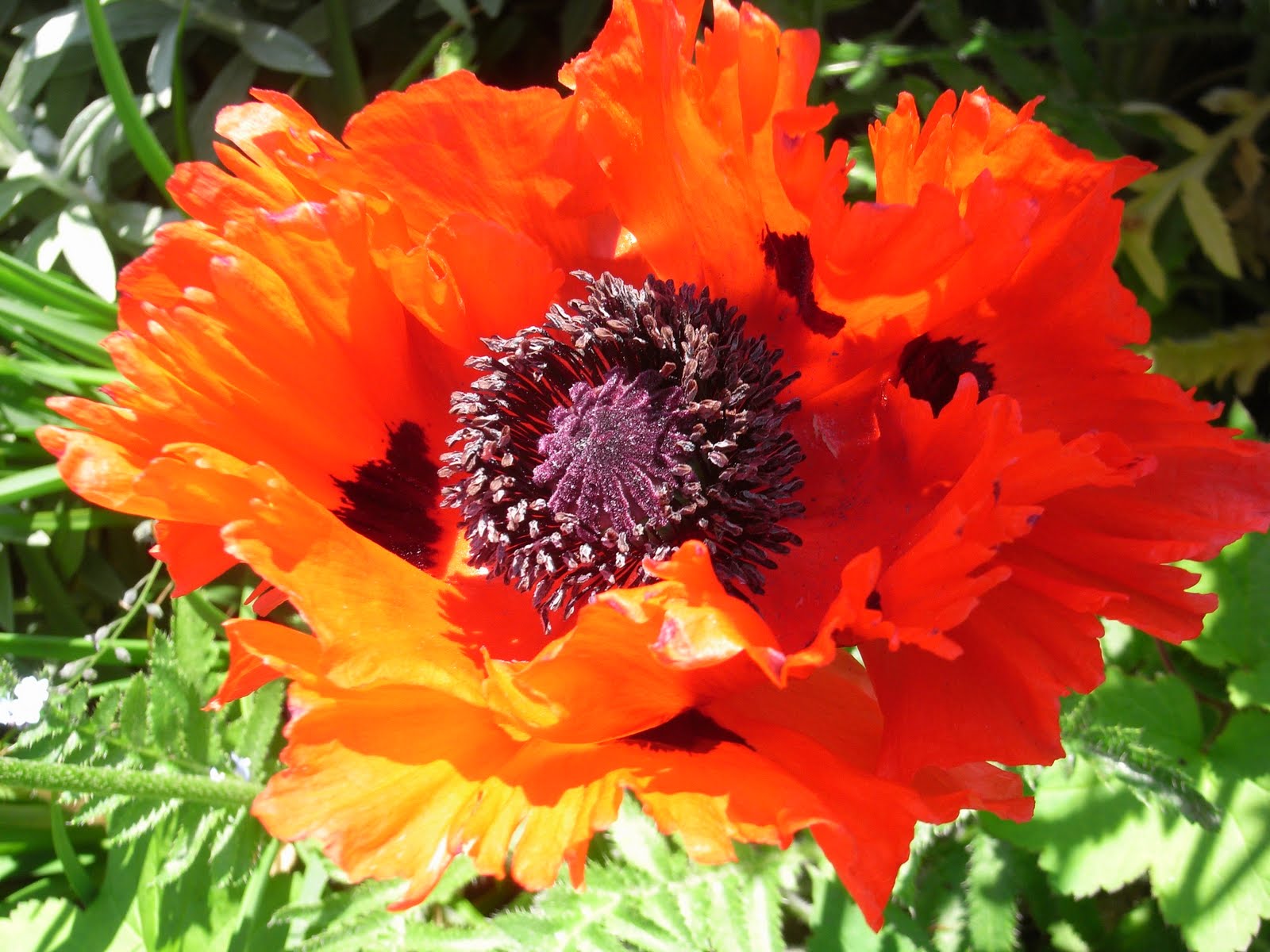
Papaver Orientalis, Red Oriental Poppies

Our Oriental Poppies bloom for six weeks from the beginning of June...so, they are just going over now. For those who are not familiar with the garden, the main colour-scheme follows the cooler part of the spectrum with some white and yellow. But, the vibrant reds and oranges, and the cooler pinks and whites of the Oriental poppies brighten up the subtle hues of the rest of the year.


Papaver Orientalis Curlylocks

It's exciting to watch the garden come alive, day by day, with the dinner-plate sized heads, the enormous inky-black anthers and the large green seedpods of these poppies. Bees bury themselves in the anthers, too.


Papaver Orientalis Dawn Pink

This species is a new acquisition for the garden. Little spotted insects seemed to enjoy being in its head. I liked the pink markings, as opposed to the black, and the subtlety of the shade of pink. The first video is called Poppymania and the music I used for accompaniment is Pachelbel's Canon.


Papaver Orientalis Dusky Pink

You can also see some of my annual poppies on the video. The second video is called June Melody At Barleycorn and the music which accompanies it is Bruch's Violin Concerto No. 1 in G Minor.
xxxxxxx

Happy viewing...and I'll be visiting soon.


Wednesday, 5 May 2010

Every Spring Is The Only Spring

Tadpoles In Egg Cells

Please click * (footnote before the videos) on each photograph to see the amazing detail, and you will see why, for me, Spring is the most marvellous season. I was born in the month of April, and each year I am filled with Spring Fever. Having not one, but, two ponds here at Barleycorn, I am fortunate to be able to observe each stage in the life-cycle of the common frog at close quarters.


Taddies With Gills

Each Spring I marvel at this miraculous spectacle of Nature with renewed enthusiasm. It matters not that I have witnessed it for each of the past twenty years since my Hubbie first created the ponds...for every Spring is the only Spring.


Tadpoles Swimming Freely

With my camera set to video mode, I went out each day and recorded the changes in their development, from spawn to tadpole. You can watch the results in the first little video, Barleycorn Taddies, at the end of this post and be filled with wonder at the metamorphosis.


Female Blackbird Gathering Nesting Material

As well as the frenzy of activity in the ponds, beginning each day with the Frog Chorus, we have also had the pleasure of being awakened by the Dawn Chorus, and a wonderful serenading Song Thrush...both of which are better than any alarm clock at enticing me out of bed. Because we have a lot of chaff left over from last year's spent flower stems, the usual suspects have been gathering their nesting material.


Blackbird's Nest

Each Autumn, I leave a crown of growth around my plants to protect them from severe frosts and to offer nesting material for the birds in Spring. This year, we have watched three pairs of Blackbirds, a Thrush, three pairs of Jackdaws and Titmice gathering chaff, moss, wool and twigs to make their nests.


Goldfinches And A Siskin

Nuts and seeds sustain the birds when they are feverishly engaged in building their nests. In the second video, Billing And Cooing, you will see a female blackbird using her beak to wrestle and tug chaff from the earth, for a whole day, and persevere until her beak could support no more strands, before flying off to a nearby Pine, where she began to weave her magic.


Siskin On A Garden Light

I do not use the word 'magic' lightly, to describe the truly wonderful creation of a bird's nest, for their intricacy never ceases to amaze me, knowing that, even with the use of a pair of hands, my effort would be a poor attempt. Though we found the nest lying on the ground the next day, the Blackbird began the marathon all over again, this time building the nest in a more sheltered Pine.


Double-Petalled Daffodil

Whenever our daffodils burst forth, I am always reminded of the exuberant song from the Mikado...
# The Flowers That Bloom In The Spring, Tra La #
... because they are further confirmation that Spring has arrived at last at Barleycorn. Another sign is the first appearance of 'our' Swallows, newly returned from their long trip from Africa to their nests in the Barn. This year we are fortunate to have three returning pairs.


Naturalised Daffodils

With the Swallows playing Spitfires, zooming in and out of the Barn from dawn to dusk each day, the car is once again sporting a dustsheet for the duration of our Barn visitors' sojourn. Further evidence of Spring is the fact that my log-piles have dwindled as pairs of Jackdaws replenished their nests in the Barn's three chimneys.


Orange-Centred Daffodil

There are five Dandelion plants in full bloom at the moment, given house-room in our garden so that Queen Bumble bees have sustenance when they crawl out of their underground hideaways each Spring... for our garden is very much one designed to encourage wildlife to take up residence.


Small Tortoiseshell Butterfly On Scilla

Small Tortoiseshell and Large White butterflies overwinter in the Barn. Several times over the years I have managed to rescue a few from cobwebs to enable them to fly off and begin their life-cycle. In the third video, Flowering At Barleycorn, you will see Taz, my constant companion, as I took the footage. Though our garden is very much in the early stages of Spring, with many joys still to unfold as the season progresses, I already feel I am bursting with joy, blessed with the wonder and majesty of it all and feeling positive about what the garden means in terms of conservation...reminding me we are the stewards of the earth.
xxxxxxx

Don't forget to turn up the volume to enjoy the musical accompaniment and the sounds of Nature in the background. Enjoy!
xxxxxxx

Click * If you decide to click to enlarge a photo, you can then click on a corner and the photo will open up to the size of the whole page...and then you will see everything in glorious detail!


The music accompanying Barleycorn Taddies is Delibes' Pizzicati.


The music accompanying Billing And Cooing is Kriesler's Schon Rosmarin.


The music accompanying Flowering At Barleycorn is Grieg's To The Spring, from his Lyric Pieces.

Friday, 2 April 2010

Celebrating The Rebirth Of Easter At Barleycorn

Snowdrops


Now the green blade rises from the buried grain,
Wheat that in the dark earth many years has lain;
Gulls Following The Plough

Love lives again, that with the dead has been:
Love is come again, like wheat that springs up green.


Coal Tit Singing

In the grave they laid Him, Love Whom we had slain,
Thinking that He’d never wake to life again,


Aconites

Laid in the earth like grain that sleeps unseen:
Love is come again, like wheat that springs up green.


Blue Tits On Weathervane

Up He sprang at Easter, like the risen grain,
He that for three days in the grave had lain;


Crocuses

Up from the dead my risen Lord is seen:
Love is come again, like wheat that springs up green.


Frog Mating

When our hearts are saddened, grieving or in pain,
By Your touch You call us back to life again;


Taz, The Barn Cat

Fields of our hearts that dead and bare have been:
Love is come again, like wheat that springs up green.


Sunset

The music accompanying the first video, Drifts Of Snowdrops At Barleycorn, is Mendelssohn's Spring Song.


Drifts Of Snowdrops At Barleycorn

xxxxxxx

The music accompanying the second video, Springtime At Barleycorn, is Vivaldi's Spring, from The Four Seasons.


Springtime At Barleycorn

xxxxxxx

Happy Easter, Everyone!