Monday, 11 April 2011

April Quickens My Heart

Pheasant At Barleycorn

In our garden calendar, April is the month, which calls forth our trumpeting Daffodils to herald the onset of Spring. For, though the months of January through to March have bestowed us with beautiful carpets of Snowdrops and sunny banks of Aconites, they are the Winter bulbs which precede the joy and beauty of Spring.

Siskins At A Feeder

Being in the heart of the countryside affords us many pleasures, some of which are occasional visits from colourful Pheasants with iridescent, ultramarine feathers. Having a large wood in the vicinity enables us to identify a wonderful variety of birds, which also frequent our feeders, forage around the garden, and drink and bathe in our ponds. This month saw the return of striking Siskins with their black crowns, green and black feathers and gold wing-bars.

Tractor And Plough

The combination of longer daylight and warmer temperatures make conditions right for the farmers to plough their fields. It's wonderful to observe the straw-coloured thatch of last year's crops being turned over by the ploughshares, and so a new farming year begins. Lambs bleating and gamboling beside their mothers, the warmth of the sun on our backs as we clear away the spent foliage of last year's perennials, the childhood joy of seeing rainbows after April showers...simple pleasures that bring us so much joy after the long, dark days of Winter.

Purple Hellebores

Hellebores are such elegant, stately plants, which spread well of their own accord, without needing to be cosseted. Over the years we have invested in white, pale green and pink varieties and each year they greet us like old friends. I love cutting away the old, leathery leaves to make way for the fresh lime-greens of their Spring foliage.
Pagoda Lilies

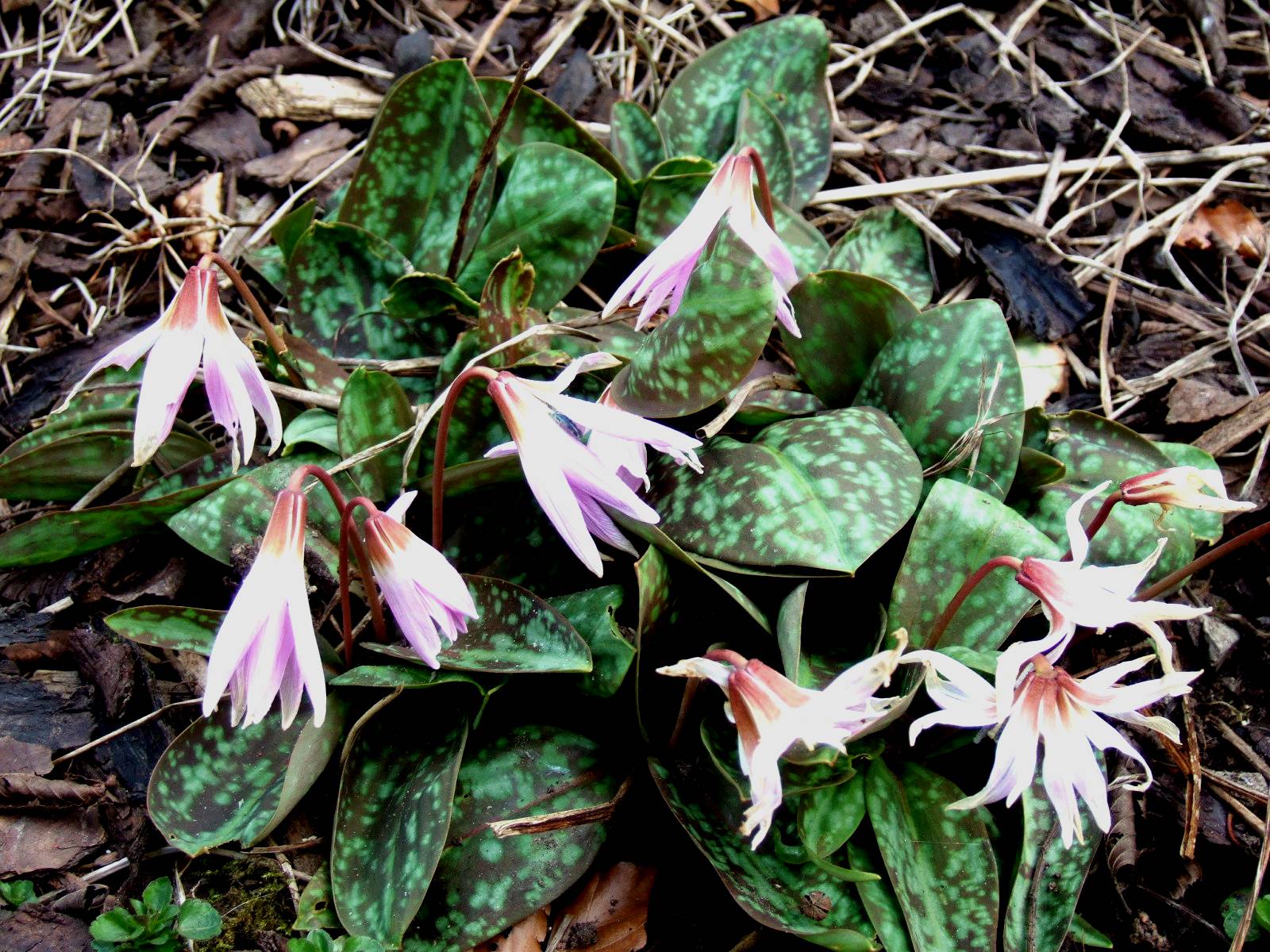
Pagoda Lilies bring a touch of the exotic to any garden. We have posies of these growing next to varieties of Trilliums. We planted them at the front of a large bed next to tall, majestic Camassias, though the latter do not bloom till next month, which helps to prolong the Spring garden. Considering that bulbs involve little effort in planting and tending, we can never have too many in our gardens. To this end, we try to plant new varieties every Autumn.

Mixed Daffodils
One section of our garden runs adjacent to a farmer's field. We share the stane-dyke wall, which acts as a border between us. Couch grass and nettles run the length of this wall on the farmer's side. Rather than try to cope with these invasive plants, I decided to plant lots of mixed daffodils and a variety of grasses interspersed with wild flowers...Pink Campion, Annual Poppies, Primroses, Aquilegia, Corncockle and Cornflower. Although we still get tall Couch Grass growing through, everything looks naturalised and saves me a headache.

Orange-Centred Daffodils

Because we have invested in planting bulbs every Autumn for the past 20 years, our Spring garden now boasts hundreds and hundreds of Daffodils. Each one is a cup of cheerfulness and a testimony to the happy years spent here at Barleycorn. I do love their nodding heads, the variety of colours and species and the heady scent of the star-shaped white Narcissus. The Queen Bees serenade me, buzzing in and around the heads from morn till night, getting their all-important sustenance after their Winter hibernation.

Double-Petalled Daffodils

Every which way I turn in our garden in Spring, I am greeted with bouquets of Daffodils; some white, others creamy-yellow, others still, orange...some with large trumpets, some multi-headed, like the tete-a-tete, some shaped like stars...so many varieties. I belong to the generation of children who learned to recite poems by heart at school. And each Spring when I gaze upon my host of Daffodils, I feel an affinity to Wordsworth's sentiments, 'And then my heart with pleasure fills, and dances with the Daffodils'.

Ripples On The Pond

The play of light on the ponds offers constant fascination. This is the month when we have Frogspawn. In March 2010, we had six weeks of snow with temperatures so low the ponds were mainly frozen. This resulted in a downturn in our Frog population. This year there was no Frog Chorus to speak of...and, yet, we still have some spawn in both ponds. The front pond is shallower and, therefore, warmer, and so the Frogs always mate there first.

Spawn Beneath The Surface

However, we now have some spawn in the back pond too. As the local farmer has been draining the pond in his field again this month, I am so glad to offer habitats to the Frogs. We are hoping the spawn will have a better chance to develop this year and that, in time, our colony of Frogs will be replenished.

Spawn In The Front Pond

It is always wonderful to be able to watch Nature unfold before our eyes and ponds are a good way of affording this opportunity. Now that the spawn is here, the Newts will follow, and, along with them, the myriad of pondlife. The many oxygenators keep the still waters clean and healthy, and the many marginals and Lilies offer shelter. Later, in the Summer, we have two species of Dragonflies, as well as the smaller Damselfies which live and breed in our ponds.

After The Spawn

After the eggs have hatched, the jelly turns a greenish colour and the Tadpoles hide amongst it and live off it. Soon we might be lucky enough to see the Newts appear...to feast on the Taddies. They always look like dragons compared to the miniature size of the Tadpoles, and they suddenly pop up from under the jelly, like Crocodiles in a tropical river.

Hoverfly On A Dandelion

The gardeners will recognise that the hairy leaves in this picture belong to Oriental Poppies. Why on earth allow a Dandelion plant to grow up amongst them? I am trying to encourage wildlife in my garden. That is the raison d'etre for its existence in the first place. It's the wildlife which brings a garden to life. Queen Bumble Bees need sustenance after their long Winter hibernation...hence the reason for allowing the Dandelion head-room. In the video for this month, you will see the Hoverfly feeding on this Dandelion. In return, it will feed upon any aphids and nasty bugs, and, like the Bees, will help with the pollination of my garden.


In Front Of The Barn

This is the biggest log-pile I have in the garden. The top is made up of fallen twigs and small branches, which are tweaked out and specially chosen by our five pairs of resident Jackdaws for replenishing their nests in the chimneys of the Barn. We leave some of the moss we gather from around the garden, spent chaff from last year's plants and any other material suitable for nest-building. Then we watch as Robins, Blackbirds, Jackdaws and Thrushes fly in to choose their pick-and-mix from the pile. In return, they feast on bugs and pests and serenade me the whole year through.
xxxxxxx

Spring Garden At Barleycorn, April 2011 is the title of this month's video, and the music to accompany it is Beethoven's Symphony No. 6 in F, Opus 68 'Pastoral', Awakening of cheerful feelings in the countryside. I hope you all enjoy it.


Friday, 11 March 2011

Time Marches On

Taz among The Snowdrops

The month of February was mainly one of birdwatching, as nothing much stirred in the garden. Most of our plants are still dormant, and most of the garden sports the chaff of last year's blooms.

A Drift Of Snowdrops

Our first flowers are always Snowdrops - those sturdy, though fragile-looking, bulbs, which force their way through the soil each Spring, regardless of however fierce the weather may be.


Snowdrops

Just when we think the weather is improving, and we might get our hands in the earth again, the arrival of snow puts paid to any such notions. The past week has seen gales as fierce as any we have experienced over the recent Winter, with showers of sleet and snow.

Aconites

Joining the Snowdrops we have a small bank of Aconites which raise their heads skywards whenever we have a peep of sunshine. They, too, are a joy and delight and greet us like old friends.

Mixed Crocuses

Winter always seems so long, and Spring slow in coming each year; and, yet, the plants in the garden come to life at their alloted time, with everything in its season.

Hellebores

Our first Hellebores have just opened their heads. Later the deep-wine ones will carpet another area and colour an otherwise drab landscape.

Sparrowhawk

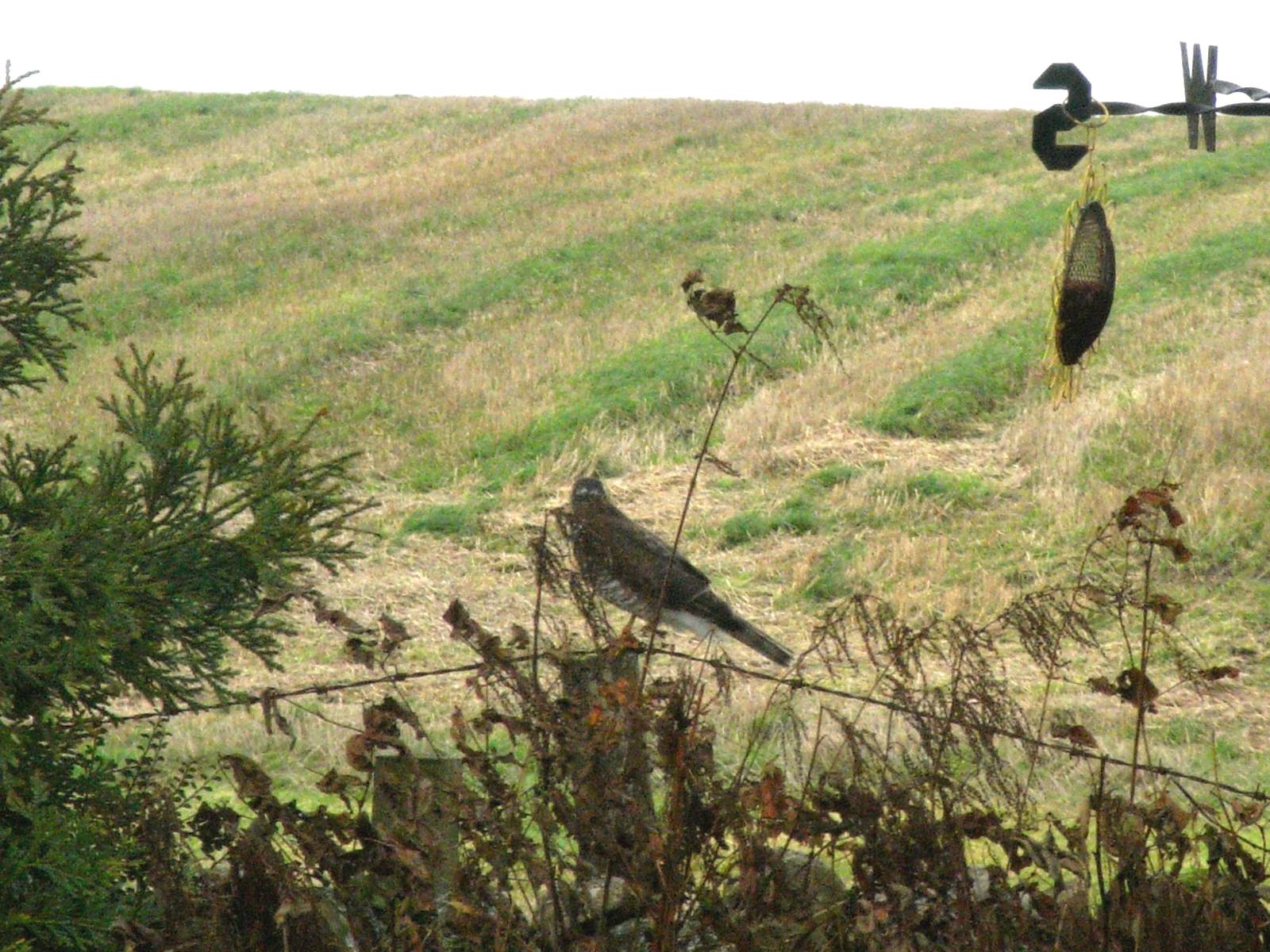
We continue to have visits from the Sparrowhawk. She is a large female who finds her favourite perches while keeping a watchful eye on the whereabouts of Taz, the Barn Cat. Whenever the latter appears, the Sparrowhawk swoops low over the field and is gone, as quickly as she appeared.
xxxxxxx

The short video this month, called - Taz Among The Snowdrops And A Sparrowhawk - was taken throughout February and the beginning of March. The music which accompanies it is taken from my CD of Bach's Aria From Goldberg Variations.

Monday, 31 January 2011

January Ode

Yellowhammers

You shall go out with joy and be led forth with peace,
and the mountains and the hills shall break forth before you.


Siskins

There'll be shouts of joy and the trees of the field
shall clap, shall clap their hands,

Chaff---Spent Perennial Stems

And the trees of the field, shall clap their hands,
and the trees of the field shall clap their hands,


Chaff---Spent Stems of Flag Irises

and the trees of the field shall clap their hands
and you'll go out with joy.

S. Dauermann

First Snowdrops of this New Year

What shall we do to combat the blues during the dark days of Winter? Why, sing, of course! Sing for joy! Look at the flock of Yellowhammers which came to greet me! I admit you have to look carefully at my first photo to see their yellow heads...but, they are there. Look at the vibrant green and black colours of the Siskins who visited the feeders one day! Most of the garden is covered in chaff...all the spent stems from last year's perennials. But! In a few months, these beds will be a kaleidoscope of colour. And...the first Snowdrops are through. What's not to cheer about a New Year?
xxxxxxx

In this month's short video, you will see the diligent Farmer doing his daily round of feeding his sheep, collie by his side. The sheep are overwintering in the field adjacent to Barleycorn., which gives us something new at which to wonder and marvel. Enjoy!


The music accompanying the video is Sir William Walton's Touch Her Lips And Part, from Henry Fifth Suite.

Friday, 31 December 2010

An Early First Foot


Brambling And Sparrow


Although tonight is the Hogmanay festival in Scotland, when we might expect our First Footers to pay us a visit, we had our first-ever visit - in 20 years - from a pair of Bramblings this month.

A Corner Of The Barn

Bramblings are similar in looks to Chaffinches, though their breasts are dark russet on top with white underbellies. Though we have seen several sightings of them on Winter walks, we have not seen them at Barleycorn before.


View From The Back Door

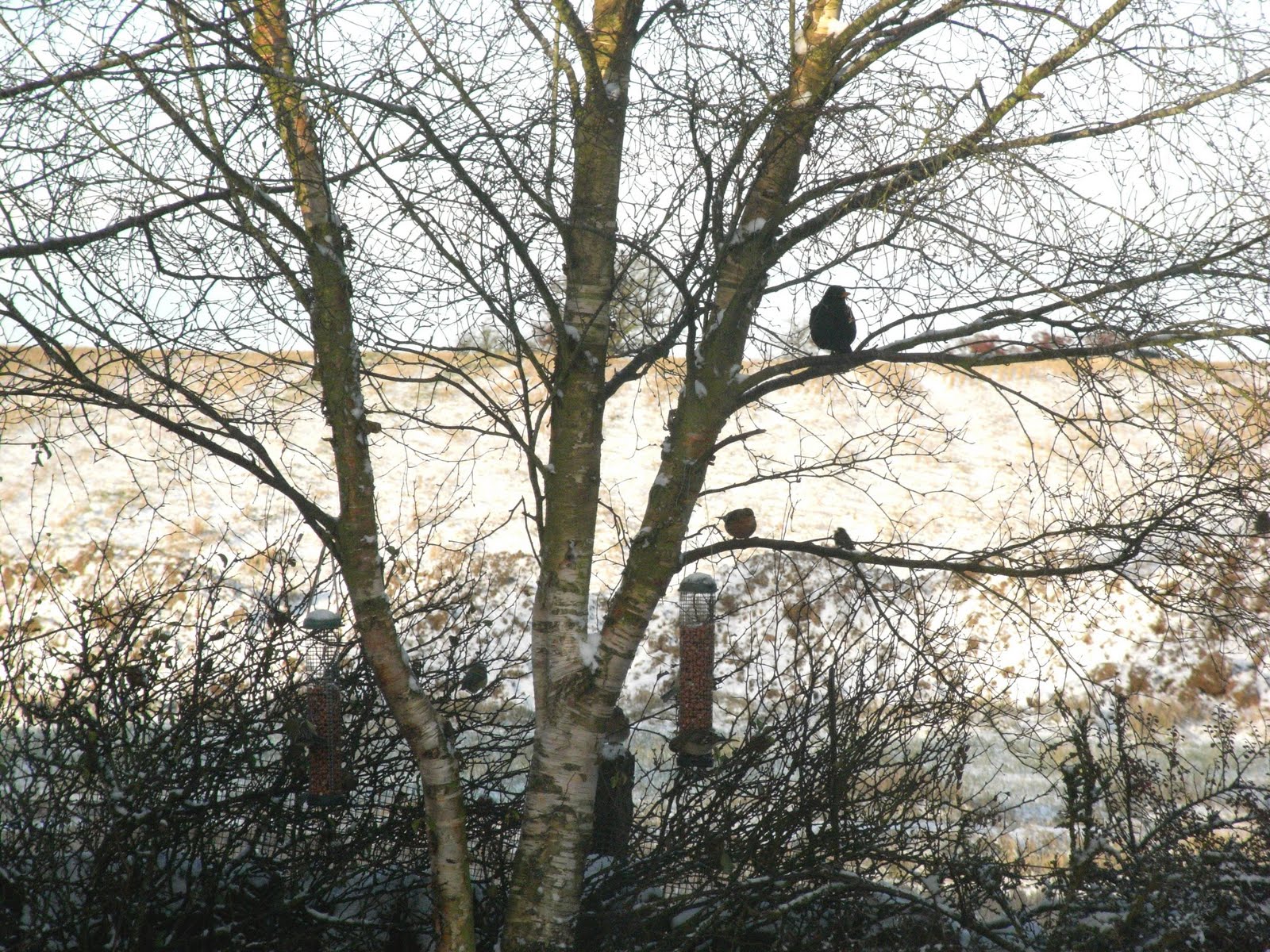
The reason for their proximity to the house was the freezing temperatures and the heavy falls of snow. The low Winter sun on the snow made for picturesque scenes in the garden, and the Big Freeze meant we had the pleasure of feeding more birds at the stations than in Summer.


Taz Indoors

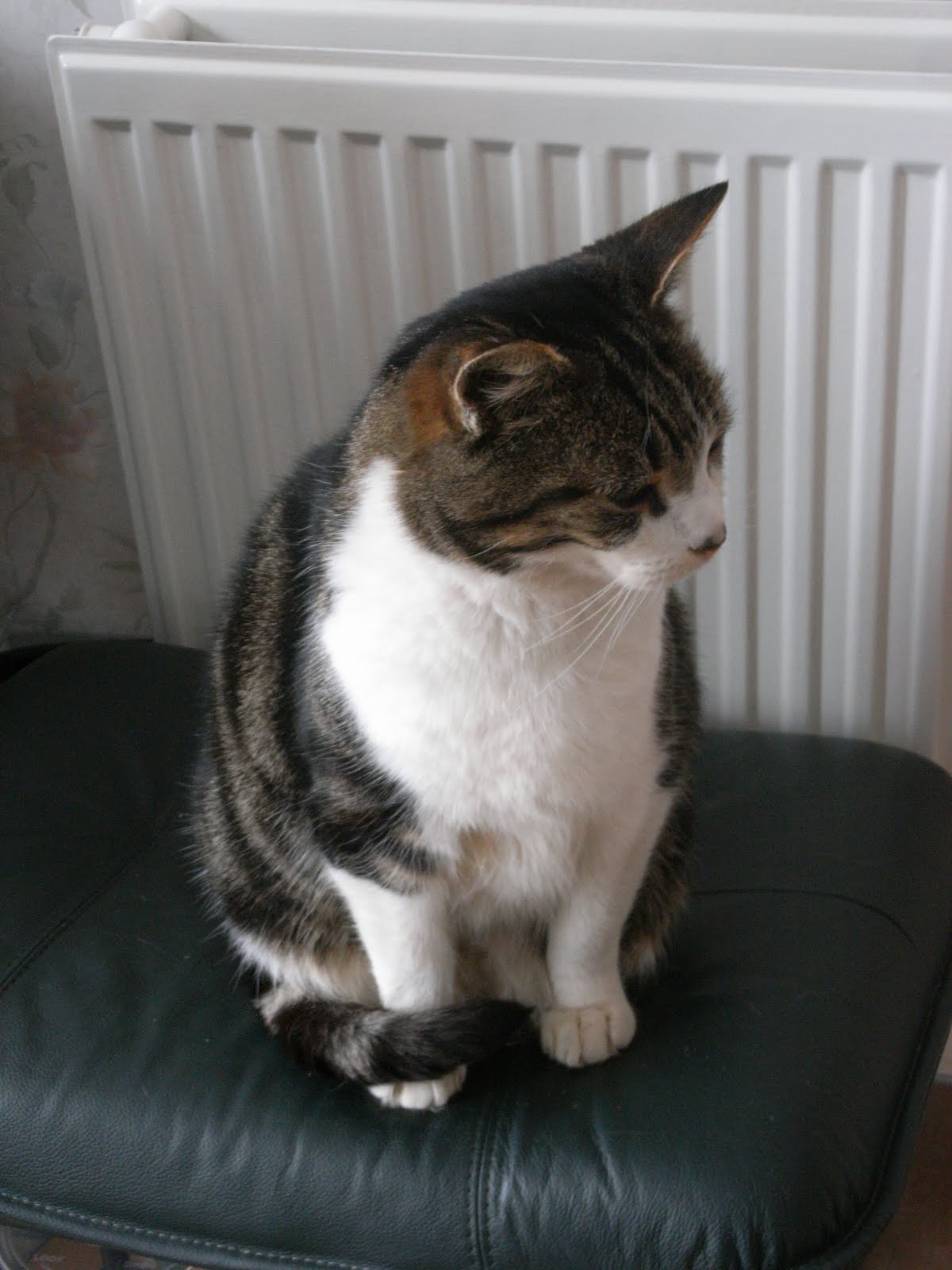
Not only did we have the company of our feathered friends, but also Taz, the Barn cat, who preferred to snuggle up beside the radiator for spells each day and forego his occupation of the Barn.

View Across The Field

This did not stop him catching the mice in the Barn for his supper. For while he has the camouflage of the trees in Summer when he goes a-hunting, he has to rely on nocturnal mammals in Winter.


The Bird Station

Each morning, we could detect the tracks of the local cats, the early birds and a Fox in the fresh snow. Perhaps it is our friend from earlier this year scavenging once more, now that we have had more snow.


This Winter the local farmer has sheep grazing in the adjacent field. The artesian well has filled again bringing Mallards each morning, flocks of Crows and Rooks and hundreds of Pigeons gorging themselves on the grain left in the furrows.


The video this month is called Garden Birds In December 2010. The music which accompanies it is from my CD Pan Pipes Of The Andes and the track is Llamada Se Los Buitres which I chose because it reminded me of whistling birds. The Bramblings are at the end of the video.
xxxxxxx

I hope you enjoy it...and, as we say in Scotland at Hogmanay, Lang May Yer Lum Reek, which, roughly translated, means... May you always have enough fuel to keep your fire going to keep you warm...and what more could we want during a cold Winter?
xxxxxxx

Happy New Year, Everyone!

Saturday, 27 November 2010

O, For The Wings

Female Sparrowhawk

At the beginning of November when the harvest bales had been gathered in and the adjacent field lay empty, a female Sparrowhawk graced us with her presence by landing on the post next to our bird feeders, where flocks of Sparrows graze for hours on end. With so much food on tap, she is becoming a frequent visitor.


The Barn

This morning's weather has brought us a light dusting of snow and temperatures of minus 6 degrees. Brrr! indeed...but, with it comes the company of our feathered friends. From a very young age I have always marvelled at the infinite beauty of our garden birds; each with a different set of claws, feathers and beaks; each created for a different purpose.


Bird Tracks In The Snow

My Hubbie rose early and braved the freezing temperature - his breath visible in the chilly air - to top up the feeders and the already groaning bird-table with seeds, nuts and dried fruits. For, though a sudden fall of snow is always a bit of a shock to the system, what better way to spend a cold day than watching the antics of the birds at all the feeding stations?

Chaffinches

As the day wore on, the Chaffinches perched high up in the Rowan tree to feel the warmth of the sun. They are with us all year round, but perfectly camouflaged when the trees are covered in leaves. And what a wonderful sight they make on a snowy day with their plumped-out chestnut feathers.


At The Bird Feeders

I love the bare bones of the garden in Winter, the silhouettes of the trees and shrubs, the frozen ponds, the outlines of birds. Rather than finding the garden boring at this time of year, the birds bring it to life once more, feasting on the remaining berries, gorging on insects around the eaves of the house and prizing open teasels and other perennials to extract seeds.


Male Blackbird

Part of the secret of having a garden is to find pleasure all year round, and not solely when the trees, shrubs and flowers are in bloom. Close observation reveals so much. Snow is a perfect backdrop for intensifying the colours of the birds. As they come closer for food, we are able to tell their food preferences, where they like to feed and be entertained by the behaviour of the pecking order.


Robin Redbreast

In surveys, the Robin is often chosen as Nation's most popular bird. Partly, this is because it is easily recognised by everyone, is common the length and breadth of Britain and never leaves our shores. It's daily appearance is a reminder of God's constant presence, and so the Robin has been chosen as a symbol of the ever-present God on our Christmas Cards, for, like God, he is always with us.


Robin

Robin is a ground feeder. He is not designed to be an acrobat, suspended upside down on the hanging feeders, like the Titmice. He, and his friend the Dunnock, are often found scrabbling under shrubs for grubs and insects. I love his habits, as he bounces upon his legs and cocks his head to one side.

Female chaffinch

Chaffinches also sing wonderful songs to us, and, as they prefer safety in numbers, we always have huge flocks of them at any one time. But, whatever the bird, each has its own charm, its own beauty, its own reason for being part of the ongoing life of the garden. Birds don't cost much to feed and the pleasure they bring supercedes any effort required by us to have their presence in our gardens. I love 'em all!


The Bird-Table

This month's video is called Our Feathered Friends. The music is Giovanni Pierluigi Da Palestrina's Mass, Missa Papae Marcelli, for 6 voices, Kyrie. It begins with the Sparrowhawk, moves on to footage of hundreds and hundreds of Crows and Rooks foraging in the adjacent field, followed by the antics of the garden birds at the bird-table, and, lastly, skeins of Greylag Geese flying in formation over Barleycorn. Enjoy!

Monday, 1 November 2010

Pause And Reflect

Sunset At Barleycorn

October began with a few breathtakingly beautiful sunsets which made me pause and reflect upon the past 20 years we have spent in this paradise of ours. And though I have mentioned some of this before, many new bloggers will not have heard the reason why we came to be here. It was not the newly-built bungalow, pretty though it was, which caused me to turn the car and return for a second look.


Tractor and Baler

Rather, it was the adjacent barn with its high-pitched corrugated roof and crumbling stone walls which spoke to me. Its decay had a story to tell and I wanted to hear all about it. The more I gazed at it, the more I felt drawn to the bare patch of ground which was crying out for a steward to lovingly bring it to life, though, little did I expect that steward was to be me. I say steward on purpose, for we only hold the keys to our gardens for a time.

Seasons of Mist

My vision was to create a garden for wildlife where insects and birds and mammals would be encouraged to come and visit or, better still, live in harmony with us. The house is mostly hidden from the road by tall indigenous trees and shrubs, but, once you have walked down the long drive and turned a corner, it is like finding a secret garden.

Fairy Necklaces

Our two ponds are the jewel in the crown of the garden, for they attract all the wildlife which comes to drink and bathe and feast. At first they were empty except for a soup of green algae. Nowadays, however, they support a colony of frogs, toads and newts which live and breed in them and gorge themselves on the myriad of pondlife creatures.

Autumn leaves

The remainder of the garden is made up of many island beds which contain trees, shrubs and nectar borders to give sustenance to insects, butterflies, birds and our all-important bees. At this time of year everything is either wearing or shedding its wonderful Autumnal coat of colours and I find pleasure in the dying back of the season.

Joseph's Rock Rowan Tree

Now is the time to appreciate the bare bones of the garden - the trees and shrubs in silhouette; the fairy necklaces left by hundreds of the most amazing nocturnal architects of the garden; the magical change from green to yellow, red to bronze; humdrum paths carpeted with a bed of soft colourful leaves; ponds frozen in time or the drip, drip of trees whose frost is melting in the misty sunshine. What is not to enjoy?

Hosta Foliage

And did I mention the songs in the garden? Our frogs serenade us on sunny days with their deep croaking. The bird-feeders have become magnets to hungry birds and their many and varied songs waken me each dark morning. Best of all the thousands of Greylag Geese have returned from Greenland to overwinter on adjacent fields. Each morning I hear their cries and rush out of bed, like an excited child, to watch their magical arrows moving across the sky.


Pond lilies and Foliage

Skein after skein passes over our house and I watch the repeat performance each evening as they make their way back to the shores where they nestle down each night. I especially love their cries when they are invisible, flying through fog, calling out to one another for safety and guidance. How do they know where to go? We have all heard the explanation, but, it is still a wonder of Nature and a pleasure to behold.

Balloon Over Barleycorn

The balloons which fly overhead are so low we can call out and have little conversations with those in the basket. Visitors come from all over the globe. A few years ago some of our family took such a ride and flew over my garden and the village. It was a magical experience, though interesting when the wind took us down to land in a field with a herd of cows, instead of a fallow one adjacent to it.

A Tiny Shrew

Even after 20 years I am still amazed at the variety of wildlife living next door to me. Taz, the barn cat, brings us presents and leaves them on the doorstep... sometimes a Fieldmouse, sometimes a Vole, occasionally a little Shrew. Late at night we sometimes see or hear Foxy who comes by hoping to find some chicken carcass which Taz has left. On red-letter days we might even see a Weasel or a Stoat, a Barn Owl or a Tawny Owl, a Badger or Hedgehog crossing the road.

Taz, Asleep In The Sunshine

Everything is welcome for each plays its part in the magical web of life here at Barleycorn. Every creature brings the garden to life and fills my heart with pleasure, for, what was once a derelict plot of ground, has now been transformed into a garden for wildlife. I am living my dream and sharing it with all those who enjoy coming here to visit.
xxxxxxx

The first short video is called Autumn At Barleycorn. The accompanying music is Erik Satie's Gymnopedie No 1.


The second short video is called Fairy Magic At Barleycorn and the accompanying music is from A Midsummer Night's Dream. The track is Between The Cold Moon And The Earth.


The third video, much longer, is called Barleycorn Ode To Autumn. The accompanying music is Brahms' Violin Concerto in D Major-11 Adagio. I hope you enjoy them all. They were taken throughout October.

Align Centre