Friday, 24 July 2009

Softly Awakes My Heart

House Martin Resting
Of all the months in the year, July, more than any other month, epitomises the poem I wrote about the garden.
Wind through the barley,
The song of the breeze,
Ephemeral poppies
The tracery of trees,
Barleycorn - Magic!
A feast for the eyes,
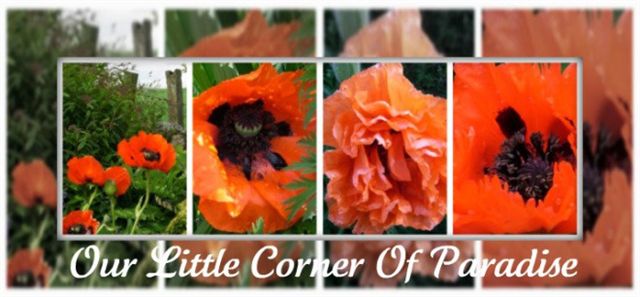
Our little corner of paradise

Young Greenfinch In flight

At this time of year everything in the garden conspires to awaken my senses and make my spirits soar, whether it be a baby house martin on its first flight taking a rest by the pond or the balletic dance of a young greenfinch, wings outspread, aiming for the bird feeder.

Adult Swallow On The Barn Gutter
Blessed with two pairs of swallows' nests in the barn this year, their fledglings from the first broods are already sitting in lines along the rafters inside the barn waiting for their parents to deliver their never-ending supply of sustenance.


Alstroemeria, Peruvian Lily

Whether I am listening to the cacophony of the feeding frenzy from my vantage point on one of the benches in the garden or trying to avoid being dive-bombed when my footsteps are too close to the barn, I cannot help but marvel at their determination to raise two broods successfully, all within one short Summer.

Papaver Rhoeas, Annual Cornfield Poppies

Whenever I wander in the garden I find the birdsong music for the soul. I could never sit listening to the radio, for it would stop me drinking in the sights and sounds around me. The beauty and intensity of the scarlet poppies gives me a feeling of renewed energy and the enthusiasm to promise myself to grow even more new varieties next year.

Papaver Somniferum, Danish Flag Poppy

So-called because the white flag in the centre resembles the flag of Denmark, these poppies have always been one of my favourite annuals. I find their deeply serrated scalloped petal edges most attractive. I found myself having to grow them in pots this year, space being at a premium nowadays in our busy garden. They require light to germinate and develop, otherwise they would get lost in the thick undergrowth.

Papaver Somniferum Var. Paeoniiflorum, Red Flowered Peaony Poppy

Eighteen Summers ago, during the first year of the garden, I sowed many packets of annual poppies amongst other meadow flowers such as corn marigolds, corncockles, cornflowers and ox-eye daisies. I had the romantic notion of wandering through the garden, paintbrush in hand, as if in one of the dreamy landscapes of my childhood, when these flowers were a common sight beautifying the cornfields.


Papaver Somniferum Var. Paeoniiflorum, Pink Peaony Flowered Poppies

It was very cost-effective, as well as a strikingly beautiful way to fill large tracts of our half-acre plot of ground quickly. This Summer I cleared away an area in our scree bed which contained woody, overgrown phlox, long since past its best, and, low and behold, the dormant seed from the paeony poppies appeared of its own accord, as if by magic. Nature often gives us surprises.


Annual Cornfield Poppies and Ox-Eye Daisies

I think its important to dream while awake, and where better than amongst the meadow flowers of one's own garden? Here I can sit and watch the majestic sky turning from leaden grey to azure blue, or watch a sunset, one minute a misty yellow, the next a melange of watery indigo-violet-pink.


Ripening Barley In The Adjacent Field


Living so close to nature as I do, it's impossible not to have feelings of positivity. To watch the farmer sow his seed in Spring, and observe the transformation of bare earth into a carpet of emerald-green shoots, is like saying farewell to dark Winter...and when, in July, the carpet turns a shade of gold, it feels nothing short of a miracle.


Cookie, The Barn Cat


Whenever I see Cookie outdoors I know it will be a beautiful warm day, for she is old now and only ventures out on the hottest of days, preferring to lie under the heat of the light bulb we have suspended above where she sleeps in the barn. She is a gentle soul, grateful for everything we do for her, and seems in a permanent state of bliss. She always reminds me to hug my friends for time passes for all of us.

Taz, Cookie's Friend

Being a much younger cat, Taz abounds with energy in his thick coat of fur. He has taken up Monstie's mantle of being my constant companion, following me around the garden, resting where I rest, often beside the poppies. Taz reminds me to have fun, and not to take myself too seriously, for no one else will.


Raindrops On Asiatic Lilies

For several years now we have grown large Oriental and the smaller Asiatic lilies in pots and troughs to provide us with a colourful display and a splash of the exotic in the garden. The flowers are long lasting with several blooms on each stem. Each Spring I renew the compost and offer any lily grubs I find to the robin.


Mixed Asiatic Lilies

This year I chose a delicate shade of pink to marry up with the russet-coloured bulbs my hubbie chose. When they came into bloom we noticed a rogue yellow one, which just goes to show we think we are in control of our lives, though, in fact, the opposite is often the case.


Calendula Officinalis, Scotch Marigold

The light in Scotland at this time of year is often quite spectacular, and a painter's paradise. Some evenings, just as the sun is setting, there is a glow coming up over the eastern horizon, making it almost continuous daylight, and the further north one travels, the more frequently this occurs.

Strawberries

July and August are the strawberry-picking months at Barleycorn and this year's harvest has been no exception. Whenever we have a bumper crop, my hubbie is often heard to say, if he eats many more strawberry tarts, cakes, pavlovas and jam, he might waken up one morning with a husk growing out of the top of his head.

Salad Leaves

My little pots of salad crops have yielded an ongoing treat of coriander, fennel, parsley, mustard, Lollo Rosso, purple basil and chives brightening up the salad days of Summer, and have encouraged us to eat more natural foods and less processed.

Mixed Salad Leaves With Alpine Strawberries

One of the wonderful things about growing Alpine strawberries is that the birds seem to leave them alone. In a salad their tartness goes well with the petals of Scotch marigolds, apple mint and borage flowers, which I also put into ice cubes to cool our elderflower wine.

Papaver Somniferum, Orange Oriental Poppies

As well as the very vibrant orange Oriental poppies, with heads the size of dinner plates, I also grow the more muted shades of white and delicate pink. The strong variation in colour reminds me not to compare myself to others. Rather, I feel we should appreciate our individuality and be mindful of the fact that each of us has our own charisma.
Papaver Somniferum, Dusky Pink Oriental Poppy
It wouldn't do if we were all made the same way, for that would be boring. The essence is the difference. I feel our concern should be to look after others and help our friends, for when we are sick, they will matter most in life.
Papaver Somniferum, Fuchsia Pink Oriental Poppy
As for our families, we should keep in touch with them as often as possible, never taking for granted the love and joy which enriches our daily existence. My brother taught me that people matter most in life. If we begin each morning with a goal, we will be able to count our blessings in the evening.
Papaver Somniferum, Perry's White Oriental Poppy
White flowers seem to create a feeling of peace in the garden, an air of innocence, a time for reflection. Feelings of stress melt away and are replaced by a sense of tranquillity. With calm, comes the knowledge that life, in all its forms, is very beautiful. We have one chance only to make our mark, and we must grab it with both hands.


White Pond Lily
Arguments are, in the main, useless, and, therefore, a waste of time, and only bring out our horns and tails. We have no control about what others think and say about us, so why worry? Bearing that in mind, we should make peace with our past, for we are responsible for our own happiness.

Mixed Pond Lilies, Ranunculus and Flag Irises

On hot July days when my hubbie and I sit by the ponds drinking refreshing green tea or a glass of wine, watching the damsels dart this way and that amongst the lilies, I reflect upon how thankful I am for the love and laughter we have shared in our lives together and for the beauty that surrounds us.
Changing Foliage Of The Lilypads

The ethereal quality of the light reflecting on the ponds creates an ever-changing tapestry of colour and texture throughout the seasons. No sooner are we revelling in the delights of Summer, when an orange leaf reminds us Autumn is just around the corner. It's that carpe diem thing of seizing the day and living in the moment.

Dragonfly Skin

We should never allow ourselves to lose that childlike excitement of savouring the new, even if we saw the phenomena last year. A dead skin is evidence of the dragonfly completing its life-cycle in our ponds and proves they are healthy habitats for the myriad of wildlife they support.
Across The Back Pond

I am frequently asked how much work the ponds entail and the answer is quite straightforward. In the eighteen years since we first created them, we have only cut back rampant growth of the vigorous grasses once. Part of the problem was that the lilies took time to establish, whereas the grasses had to be hacked from their baskets. Covering as much of the pond's surface is the secret to preventing algal growth.
Blue Pond Irises
Other than that the ponds have mostly looked after themselves. On a sunny day I might skim a light rake across the surface of the water to collect any floating algae,
which I then leave along the edges of the pond to allow any creatures to make their way back to safety. After a week the algae goes on the compost heap.

Delphiniums, Arunus and Aconites

Along the stone-dyke wall bordering the adjacent field, I grow delphiniums, aruncus, aconites and a yellow berberis for the visiting bees and bumblies. In June and July the whole length of the path seems to hum with the soothing drone of their music. It is one of my favourite sounds of Summer.

Bumble Bee On Delphinium

In the early years I used to grow delphinium and foxglove seeds in alternate years, as I love both of these flowers so much. It's all to do with their attractive tapering spires and the fact that the bees adore them. However, the slugs can be voracious gobblers over the Winter months when the frogs are hibernating at the bottom of the ponds and there is a scarcity of hedgehog activity. This white one is a favourite as it has managed to win the battle each year.
Blackbird Singing In The Rain
Each year the garden manages to support several blackbird nests. As a result we are serenaded morning, noon and night. If any of you have been wondering about the beautiful whistling in the background to the videos, nine times out of ten, it is most likely that of the blackbird's. I posted this photo to show that we have had some rain during this glorious Summer, and the darling bird in the photo has sung his way through the sunshine and the showers, filling my heart with gladness.

Rainbow Over Barleycorn
Although July is our monsoon month, after the rain comes the beautiful rainbow. The Greek legend tells us that Iris, the goddess of the rainbow, was sent to replenish the rainclouds, and how else would our crops grow without precious water? If that doesn't retore your soul and make you feel, 'God is in his heaven, All's right with the world', then nothing will.

Barleycorn In July

This is the sight which greets visitors to Barleycorn in the month of July, though the poppies will last till September. Poppies and violas between the paving stones, Oriental and Asiatic lilies in pots and troughs and the climbing New Dawn Rose over the door...to say, Welcome, Everyone!

Barleycorn Sunset

Saint-Saens' music, 'Softly Awakes My Heart', sung by Olga Borodina, plays in the background of my little video. It helps to impart my feeling about the sensory experiences at Barleycorn in the month of July. Not for me the tedious queue at the airport on a hot, sticky day waiting to fly off to some exotic destination. Everything I need is right here in our little corner of paradise.
Translation Of The Aria

My heart opens to your voice as the flowers open at dawn's kisses!
But, o my beloved, the better to dry my tears,
let your voice speak once more!
Tell me that you are coming back to Delilah for ever!
Reminding me once again
of the promises of bygone days, those promises I loved!
Ah! Answer my tenderness,
Fill me with ecstasy!
Answer my tenderness.
Some of you may prefer to turn up the volume as part of the footage was taken on windy days.


Wednesday, 17 June 2009

Barleycorn Meditation In June

Papaver Rhoeas, Cornfield Poppy
When I was born, God blessed me with the gift of wonder, which nurtured my passion for life in general, and the world of Nature in particular. I seem to observe the flora and fauna around me as if wearing the rose-tinted spectacles of a young child exploring everything in the environment for the first time. That's why, for me, the appearance of the first cornfield poppy in our garden in June causes my heart to skip a beat.

Swallows At Barleycorn

Along with this gift came the blessing of optimism, which helps me to look at the broader picture in life, and, in times of adversity, helps to sustain me. I believe that we are the stewards of the earth and that we are meant to live in harmony with Nature in all its glory. When I contemplate the difficulties facing a pair of swallows returning all the way from Africa in order to rebuild their nest in the same place in our barn, year upon year...well, that blows my mind!

Mixed Aquilegia, Columbine

How do they do it? Each Spring I await their arrival with bated breath, and my spirits soar when I hear their excited twittering overhead. Our barn doors have a space at the top where they swoop in and out to their nest, like trapeze artists, with perfect ease, never missing the mark. Taz and Cookie, the barn cats, are well-used to sharing their quarters over the Summer months with two messy broods of chicks.

Mecanopsis Cambria, Welsh Poppies

Even though the path behind our barn is 70 foot long, it is a mere metre in width. When we came here, almost eighteen years ago, it seemed appropriate to sow wild flowers along the length of it. Some years biennial foxgloves grow in profusion, their long tapering spires offering tunnels of delight to foraging bees. This year, it's the turn of the Welsh poppies to hum with droning bumblies.

Cepaea Hortensis, Banded Snail

And what about the place of the humble snail in my garden? Loving all God's creatures as I do, I could not possibly imagine that my duty should be one of extermination for the entire population, for how else would the beautiful song thrush, which serenades me each morning, thrive? Or, for that matter, the colony of frogs which breed in the two ponds? And what would our resident hedgehogs feed on?


Christophii Alliums, Ornamental Onions

Wildlife will only thrive in a nurturing environment and form part of the magical web of life in our gardens with our help. That does not mean to say I skip for joy when I discover a row of seeds has disappeared overnight. Instead, I grow some of my salad crops in pots and in long containers, as well as in the earth. That way, there's always some to spare. I find eggshells and coffee grinds helpful deterrants, as well as a border of Scotch marigolds or alliums.


Painted Lady Butterfly On Polygonum Superbum, Bistort


Another exciting visitor to arrive in our garden from Africa each year is the Painted Lady butterfly. This year there seems to be a mass migration, here in the UK. This one is feeding on the bistort, Polygonum Superbum, which I grow as an early nectar border plant beside the pond at the front of the house. Some people find the bistort a noxious weed, and, on first appearances, it does not seem to have the wow factor, but my feelings positively warm to it when I observe so many butterflies, bees and insects foraging on its flowers.


Papaver Orientalis, Double-Petalled Oriental Poppy


The colour palette in the garden consists mainly of shades of pink, blue, mauve, lavender, violet and purple, with some yellow and white, here and there. But, all that subtlety changes dramatically in the month of June, when the Hallelujah Chorus of the garden - the Oriental poppies - punctuate the otherwise muted tones. I am not alone in feeling attracted by the enormous vibrant redheads, with their striking inky-black anthers, for the bees pay them frequent visits too.

Lychnis-Flos-Cuculi, Ragged Robin
The wild lychnis, otherwise known as Ragged Robin, has a special place in my heart as it transports me back in time to childhood walks with my family, when we were allowed to gather and press a collection of wildflowers in a scrapbook in order to identify them. When my own children were growing up we took pocket guides with us for identification. Back home, we would draw sketches of the plants and the wildlife we had seen. I grow my Ragged Robins at the edge of the pond as they prefer their feet in damp places.

Papaver Orientalis, Dusky Dawn, Oriental Pink Poppy
The flamboyant Oriental poppies need not clash with the quieter tones in the garden as they come in gentle shades of pink, such as the one above, and Patty's Plum is a lovely shade of blackcurrant-purple. I also make room for a lovely classic white one called Perry's White.

Bombus, Bumble Bee On Lupin
My favourite sounds in the garden are the birdsong and the humming of the bees. For me, nothing exudes that magical quality of June in the garden more than bees' humming. Nothing makes me happier than to potter away the afternoon, thinking of nothing in particular, with the birds and bees for company.

Papaver Orientalis, Double-Petalled Oriental Poppy
Raindrops on poppies is also a common sight in the Barleycorn garden, for without the much-needed rain, my garden would not look as vibrant and lush as it does, and, never more so, than in the month of June. Even in their 'going over' period, I find beauty in the crumpled, frilly, translucent petals, and the discarded black anthers lying on the ground.

Rosa Zepherine Drouhin, Bourbon Rose
As far as I'm concerned the garden has to be a complete sensory experience, with smell coming to the fore in the Summer months. With that idea in mind, I grow a climbing Bourbon rose, called Rosa Zepherine Drouhin, outside one of the bedroom windows, so that its heady perfume fills the air on warm June days in particular. This year we have been blessed with a profusion of blooms. For me, this is a huge bonus as it is so difficult to grow roses in these parts as we are 225 metres above sea-level, with frequent winds blowing across the landscape.

Papaver Orientalis, Red Oriental Poppy
'Red and green should never be seen', goes the old adage. But, I love the combination. Green goes with everything as it is a perfect foil. With flowers as big as dinner plates, translucent petals for light to dance upon, ephemeral poppies add a touch of sophistication and glamour to the garden in Summer. I love the finely-cut, fern-like, hairy green foliage and the silky-textured, crepe paper petals of the ballgown flowers. You could be forgiven for thinking that the stunning blooms they produce would be difficult to grow, but nothing could be further from the truth.

Zygoptera, Red Damselfly
Red, blue and green damselflies flit around the ponds in June, adding a magical touch to the garden. With their two pairs of translucent, gossamer wings folded along their abdomen, they measure about 30mm in length. The adults feed on small insects and their larvae live on aquatic insects before emerging, after one year, as adults. I regard them as the fairies of the garden and find them very attractive to watch on sunny afternoons. Is anything more redolent of Summer?

Pots Of Salad Crops
It's amazing how many pots of plants can be grown from one bag of potting compost and a few packets of seeds. I also grow a few raspberry canes in pots, though I grow my strawberries in beds. Is there anything more exciting than eating one's home-grown produce, whether it be for a few weeks or a few months of the Summer?

Papaver Orientalis Turkenlouis, Oriental Poppy Curlylocks
Turkenlouis has to be the loudest Oriental poppy I grow. I love its serrated edges, the double-frilled petals and how they always hold their heads open to reveal the enormous seedbox and the black anthers. I grow it beside a yellow hemerocalis for contrast.

Hosta Sieboldiana
Hosta Sieboldiana has large, deeply-ridged, heart-shaped leaves of glaucus blue, and, when it rains, it holds enormous droplets of water. I find that most attractive. In all eighteen years here, the slugs and snails have never attacked my hostas...and I have many varieties of them. It is a dramatic plant in any border.

Papaver Orientalis, Oriental Poppies By The Front Pond
Over the years, I have filled my cottage garden with so many plants, there is little room for weeds to grow. A few years ago, in Springtime, while the plants were still small, I covered the areas between the flowers with bark, as a weed suppressant. It also helps as a mulch in dry weather.

Taz, The Barn Cat, In The Back Garden
Along the back wall bordering the adjacent farmer's field, I grow a nectar border for insects and butterflies, which, in turn, feed the birds. Taz, one of the barn cats, likes to lie in wait for voles and shrews. Over the years, I have been chasing my tail trying to combat the fierce winds blowing down my taller flowers, such as delphiniums and aconites, that I decided upon a plan of action for the whole garden.

Geranium Psilostemon
For two days in the month of June, I go around the whole garden with canes of varying sizes and thin green wire and insert them as a defence barrier. It looks a bit like invisible mending, for only the sharpest eyes could detect where I have been. It has been most successful over the past few years, as everything is held upright till the end of the season and the paths are kept clear. Best of all, on wet days, it is possible to walk around the entire garden without wet plants brushing against one's legs. This tall psilostemon geranium would be flattened by our strong winds in a day if it were not held upright. I love its magenta-coloured flowers as well as its attractive foliage.

Housemartins At Barleycorn
This year our housemartins did not arrive till the first day of June. But, we are lucky to have them. Normally we have three pairs building in the three apexes of the house, sometimes with triple nests in each...this year, only one pair. They have friends who join them in the evenings when they wheel overhead, and, to our delight, swoop and dive across the ponds catching insects on the wing, along with their other friends, the swallows.

Chaerophyllum Hirsutum Roseum, Cow Parsley
Cow parsley is usually a plant of the wayside, but I like its habit and grow some in my nectar borders. I also have the garden cultivar - chaerophyllum hirsutum roseum - which has pale pink blossom. It needs to be in a mixed bed as it can easily take over if left in too big a space, but it pays its weight in gold as far as the bees and insects are concerned.

Ranunculus, Meadow Buttercup
Do you like butter? Again, because of happy childhood days spent making daisy and buttercup chains, I grow ranunculus beside my wild cornfield poppies. A garden, for me, has to contain dreams and evoke memories, making room for the wildflowers as well as the cultivars in order to create a sense of soul and romance. It must tell its own story.

Nectar Borders In The Back Garden
This photograph shows a section of the garden made up of nectar borders. But, without them, I would not have so many varieties of visiting bees, insects and birds, which, in turn, bring visiting mammals. I have often been asked which flowers are my favourites. If I must choose it is a toss-up between wild poppies and foxgloves. But, each flower in season is a favourite...so many hues, so much individuality, such a variety of perfumes, each with their own story.

Borage Officinalis, Borage
Another of my favourites is the borage. The wonderful blue, (though sometimes white or pink) five-petalled, star-shaped flowers hanging in profusion, the tall graceful way it grows, the hairy leaves...all are attractive to me, and so nectar-rich for the bees that beekeepers often grow this plant.

Cirsium Rivulare Atropurpureum, Ornamental Thistle
My cirsium grows between six and seven foot tall. It is a very elegant plant, very stately with amazingly large leaves, considering the thistle heads are relatively tiny. Again, the bees adore it, as you will see in the little video I have taken.

Papaver Orientalis, Oriental Poppies At The Stane Dyke Wall
Although we have fierce winds blowing across our open landscape, I love to stand at the fence and watch the wildlife across the field. Sometimes there are buzzards mewing overhead, or larks making my heart soar with their amazing songs. Perhaps that's why I love Vaughan Williams' The Lark Ascending so much. Barley is the main crop grown in the adjacent field...and I love to hear the wind through the barley and watch it making waves while the barley is still young enough to bend.

Lupins, Geraniums, Aquilegia
The lupins in this photo have the most exquisite perfume. I wish I could bottle its scent and open it on cold Winter days to remind me of summery June. Over the years I have grown so many varieties of aquilegias....and they seed all over the place, which is a bonus to me. They are so enduring and add their own magic to our cottage garden. I love their 'Granny's bonnets', as we call them hereabouts, and their form and foliage, which can vary between acid green and purple-green.

Yellow Flag Irises In Back Pond
Yellow flag irises, also known as Jacob's sword, are stately plants of wild ponds...and of our ponds too. Again, so reminiscent of my childhood days at my Granny's cottage, I couldn't bear to be without them, for, though they used to be a common sight in the wild, with so many of the farmers' ponds being drained for intensive farming methods, they are growing scarcer each year. One school of thought says they are the origin of the fleur-de-lis in heraldry.

Mixed Nectar Borders In Front Garden
These borders are in the front garden. One whole bed contains varieties of geraniums, which flower for months on end, and if cut back, return with a final flush in September. I find the geranium a 'must' as they are easy to look after being disease-free, and bloom for long periods of the Summer.

Rosa Glauca, Rose
Lastly, I have chosen to show you my rosa glauca, the foliage of which is a wonderful shade of grey-purple with purplish-red stems. I am always told they do not do well in exposed windy sites, but, for some reason, they do well for me. Apart from the attractive cerise-pink flowers, in Autumn they have unusual wine-red fruits which feed the birds. The photo is well worth enlarging to see all the amazing tones in the foliage....and to spy the sweet little insect on the flower. The birds eat the fruit and leave me many seedlings scattered around the garden. I pot them up and grow some for myself, some to sell at garden fayres and some to share with friends and fellow gardeners.
xxxxxxx
The little film below was taken over a few days in June, and is made up of many little videos. If you turn up the volume you will hear the wonderful birdsong and the buzzing of the bees, the winds blowing and cars passing by, as people go about their daily business. It lasts for nine and a half minutes, so, if it sticks a bit, please be patient. The music, which plays through twice, is Thais' Meditation by Massenet. Enjoy!
xxxxxxx
If you click to enlarge each photo, you will find when the photo was taken, and the botanical name as well as the common name of each plant.